Climate finance · fiscal policy · 2026
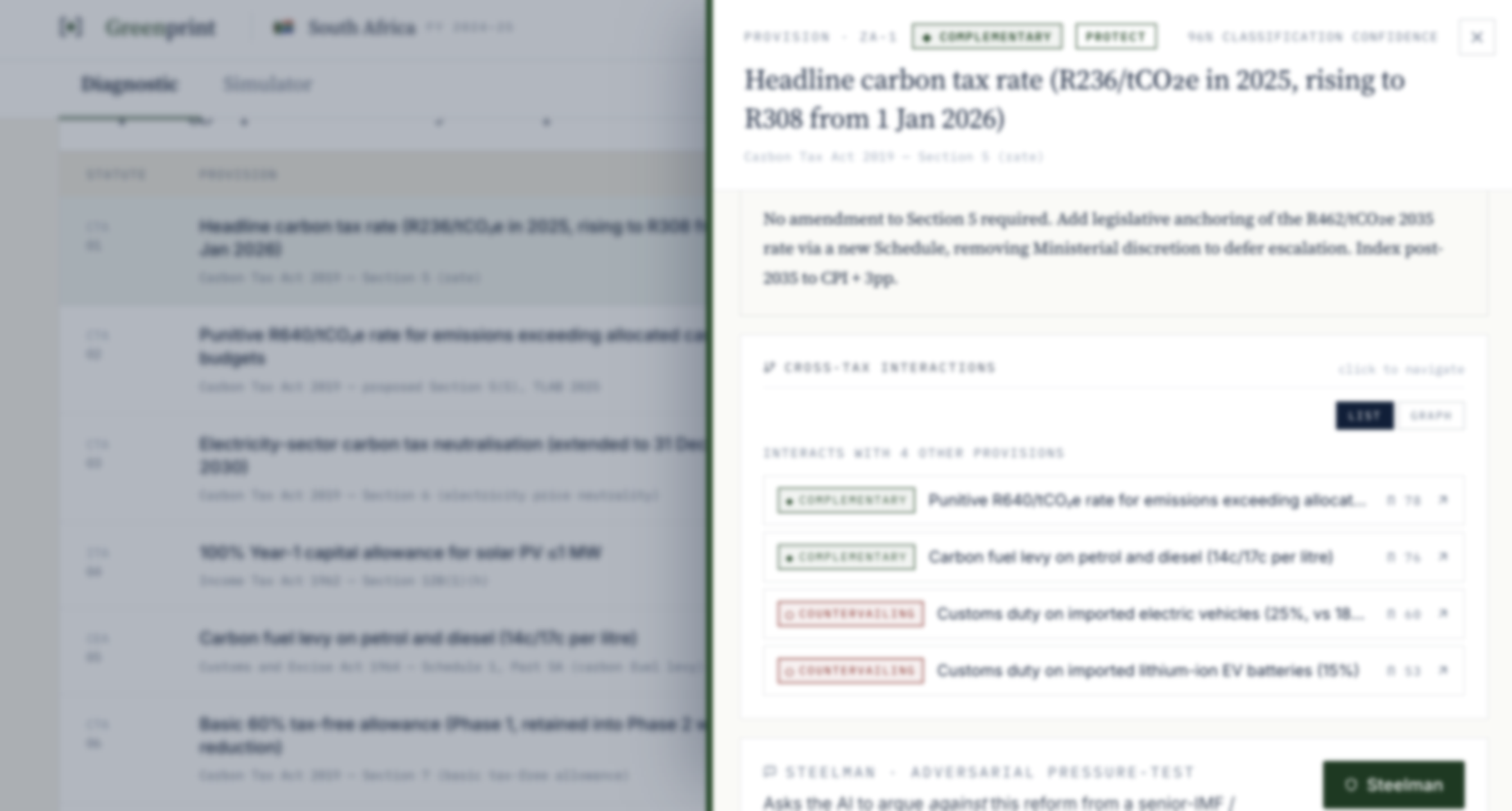
Diagnostic tool for finance ministries testing whether a national tax code actually supports the climate commitments the country has signed. Our models read the body of fiscal law, income tax, VAT, customs, excise, carbon levies, statute by statute and clause by clause, and weigh each material provision against the country's stated targets. Every provision is sorted by how it relates to those commitments: complementary, countervailing, overlapping, or redundant. The tool then maps how the provisions interact and flags where one law's relief quietly cancels another's charge on the same source of emissions, giving a clear verdict for each.
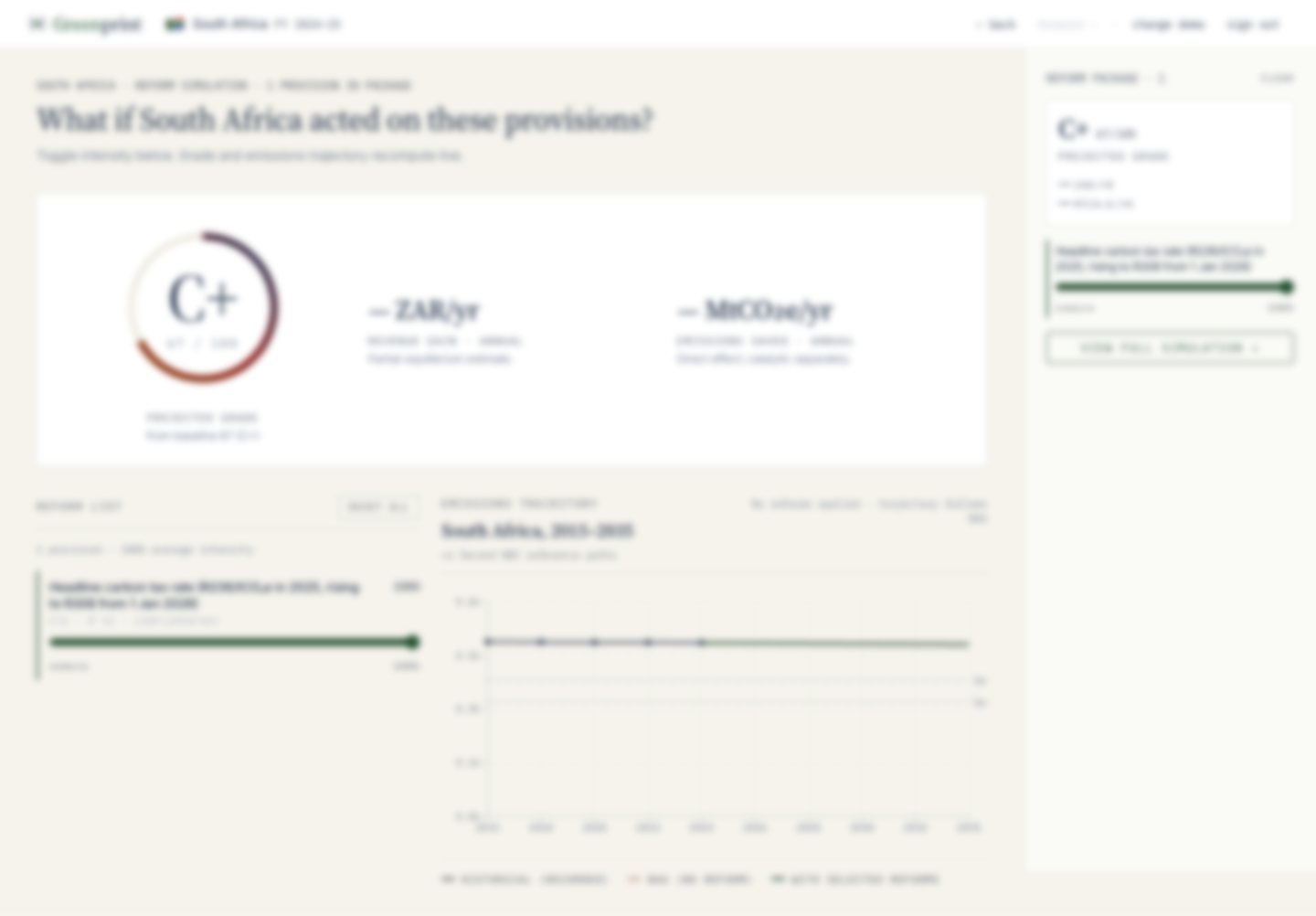
Each finding comes with a steelman counterargument, the strongest case for leaving things as they are, so reviewers weigh it before recommending change. A single coherence score and letter grade roll up the individual findings, weighted by how much each one matters and how confident the tool is in it. Reforms are ranked by impact and by how achievable they are, and a built-in simulator lets policy teams assemble a package of changes and dial their intensity up or down, watching the grade, the distance to target, and the emissions path move in real time.